
Siding That Looks Recently Installed
House Washing in Marshall for homes where algae, mold, and dirt have darkened exterior surfaces
North-facing walls on Marshall area homes develop black streaks from algae colonies that thrive in shade and humidity, while brick surfaces show green discoloration where moisture wicks through mortar joints. These aren't cosmetic issues alone—organic growth holds moisture against siding materials, accelerating paint failure and wood rot beneath the surface layer.
Diamond M Softwash uses soft washing for house exteriors, applying cleaning solutions at low pressure to kill growth at the root rather than temporarily blasting it away with high-pressure water that damages paint adhesion and forces moisture into wall cavities. This method works safely on vinyl siding, fiber cement, stucco, brick, and painted wood without voiding manufacturer warranties that specifically prohibit pressure washing above certain PSI thresholds.
The service treats entire exteriors including soffits, fascia, window trim, and foundation walls where splash-back from rain creates constant moisture exposure. Soft washing eliminates the spores that cause regrowth, meaning cleaned surfaces stay visibly clean for twelve months or longer compared to the weeks-long results from pressure washing that removes surface contamination but leaves root systems intact.
Schedule a property evaluation to identify which surfaces require soft washing treatment and assess whether gutters, porches, or other features need simultaneous cleaning in Marshall, Carthage, Henderson, and surrounding areas.
What Happens After Soft Washing Treatment
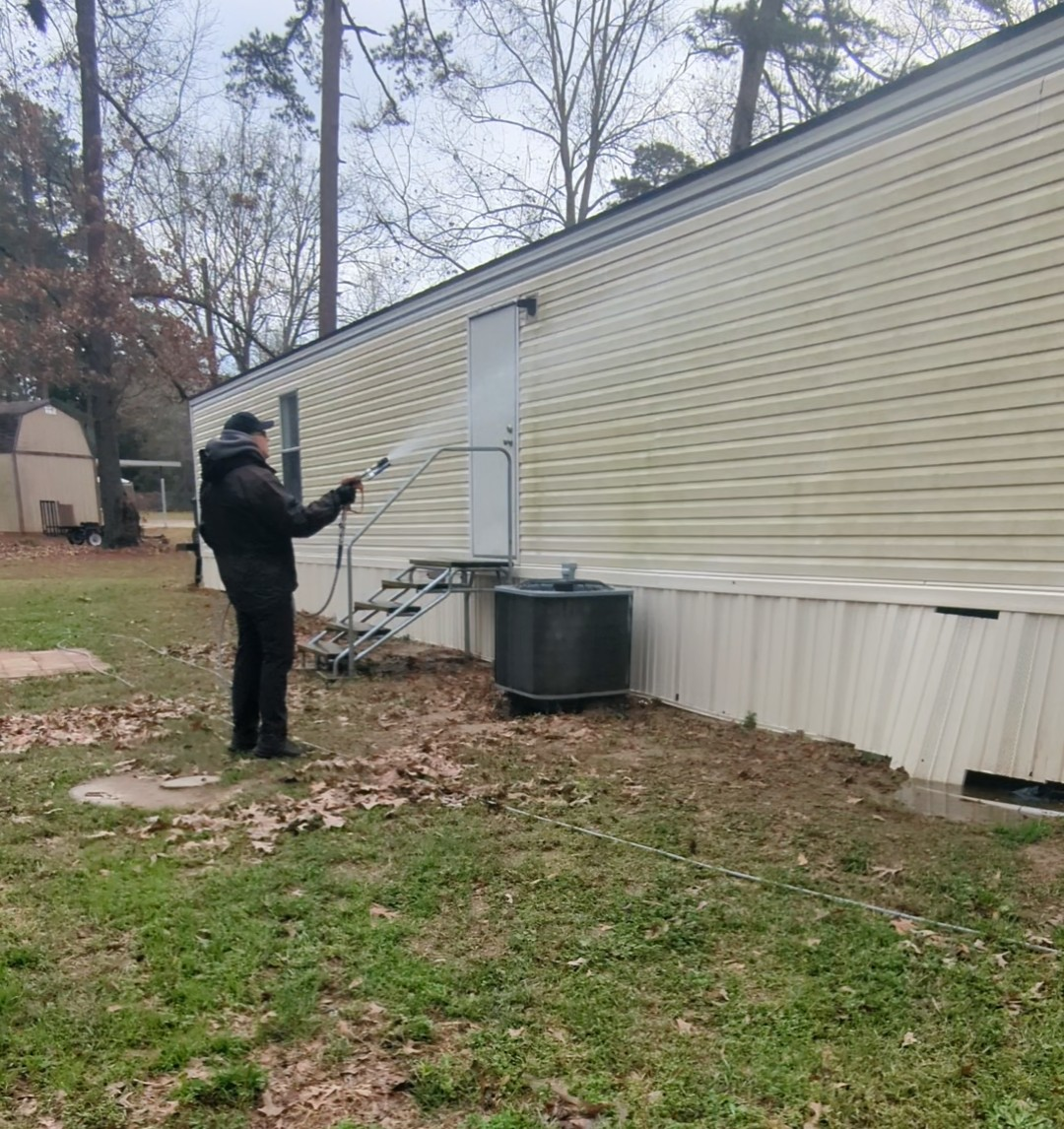
House washing begins with application of biodegradable surfactants that penetrate porous surfaces where algae and mold have colonized, breaking down organic matter during a dwell period that typically runs ten to fifteen minutes depending on contamination severity. The solution works chemically rather than mechanically, eliminating the need for abrasive scrubbing or high-pressure blasting that strips protective coatings. Controlled rinsing removes dead growth and cleaning residue without saturating underlying materials or flooding window seals.
Once treatment finishes, siding returns to its manufactured color without the faded or chalky appearance that pressure washing sometimes creates on vinyl and painted surfaces. Brick and stone show natural color variation instead of uniform darkening from biological films. Homeowners notice improved curb appeal immediately, but the longer-term benefit involves halting deterioration caused by moisture-trapping growth that compromises paint bonds and surface integrity over seasons of freeze-thaw cycles.
The process includes pre-wetting landscaping to dilute any overspray, treating heavily affected areas with concentrated solution before full-house application, and post-rinse inspection to confirm complete removal. Any sections showing persistent staining receive additional treatment before final rinse, and delicate surfaces like decorative shutters or light fixtures get hand-detailed to prevent damage.
Common Questions About This Service
Homeowners considering house washing often need information about safety for specific materials, timing relative to painting projects, and how soft washing differs from traditional pressure washing before scheduling service.
What surfaces can soft washing safely treat?
Soft washing works on all common exterior cladding including vinyl siding, fiber cement, wood, brick, stucco, EIFS, and composite materials without causing damage or voiding warranties that prohibit high-pressure cleaning methods.
How long does house washing take to complete?
Most single-family homes require two to four hours depending on square footage, contamination level, and architectural complexity, with larger properties or heavily affected surfaces extending service time to ensure thorough treatment.
When should house washing occur relative to exterior painting?
Cleaning should happen at least two weeks before painting to allow complete drying and surface assessment, or immediately when postponing painting to extend current finish life by removing growth that accelerates paint failure.
Why does algae return faster on some wall sections?
Shade from trees or neighboring structures, proximity to irrigation systems, and prevailing wind patterns that keep surfaces damp all accelerate regrowth, particularly on north and east-facing walls in Marshall's humid climate where morning dew lingers into afternoon.
Diamond M Softwash offers combined pricing when scheduling house washing alongside driveway cleaning, deck treatment, or other exterior services that benefit from simultaneous equipment setup. Call (903) 263-2522 to receive a detailed estimate based on your home's specific materials, square footage, and current condition requiring treatment.